Essential 4WD Recovery Gear for Off-Road Operations
Apr 06,2026
Essential 4WD Recovery Gear for Off-Road Safety and Business Continuity
Operating a fleet of 4WD vehicles often means navigating challenging terrain, from construction sites to remote service locations. While the thrill of off-road capability is undeniable, the reality is that even the most experienced drivers and capable vehicles can get stuck. Imagine a critical delivery stalled, a project delayed, or worse, a team member stranded because a vehicle is immobilized in mud, sand, or snow. This is more than an inconvenience, it costs your business time, money, and potentially damages your reputation. Equipping your fleet with the right 4WD recovery gear is not an optional extra; it is a fundamental investment in operational efficiency, asset protection, and the safety of your personnel.
As an agency owner, I have seen firsthand how proactive planning prevents costly setbacks. A well-prepared vehicle, outfitted with essential 4WD recovery gear and operated by a trained team, can mitigate risks significantly. You protect your valuable assets and ensure your operations continue smoothly, even when facing unexpected challenges in the field. Understanding and investing in proper recovery equipment ensures that your business maintains its productivity and safety standards, no matter the environment.
The Core Components of Your 4WD Recovery Gear Kit
Building a reliable 4WD recovery gear kit requires careful consideration of several key items. Each component serves a specific purpose, designed to help you extract a bogged vehicle safely and efficiently. Overlooking any of these essential pieces can lead to prolonged recovery times or even dangerous situations, costing your business hundreds or thousands of dollars in lost productivity.
Recovery Points: Before you even think about connecting recovery equipment, you need certified recovery points. Factory-fitted tie-down points are often not rated for recovery forces and can fail catastrophically. Invest in purpose-built, rated recovery points, typically costing between $100 and $300 per pair, which bolt directly to your vehicle's chassis. Ensure they are correctly installed and clearly marked for use.
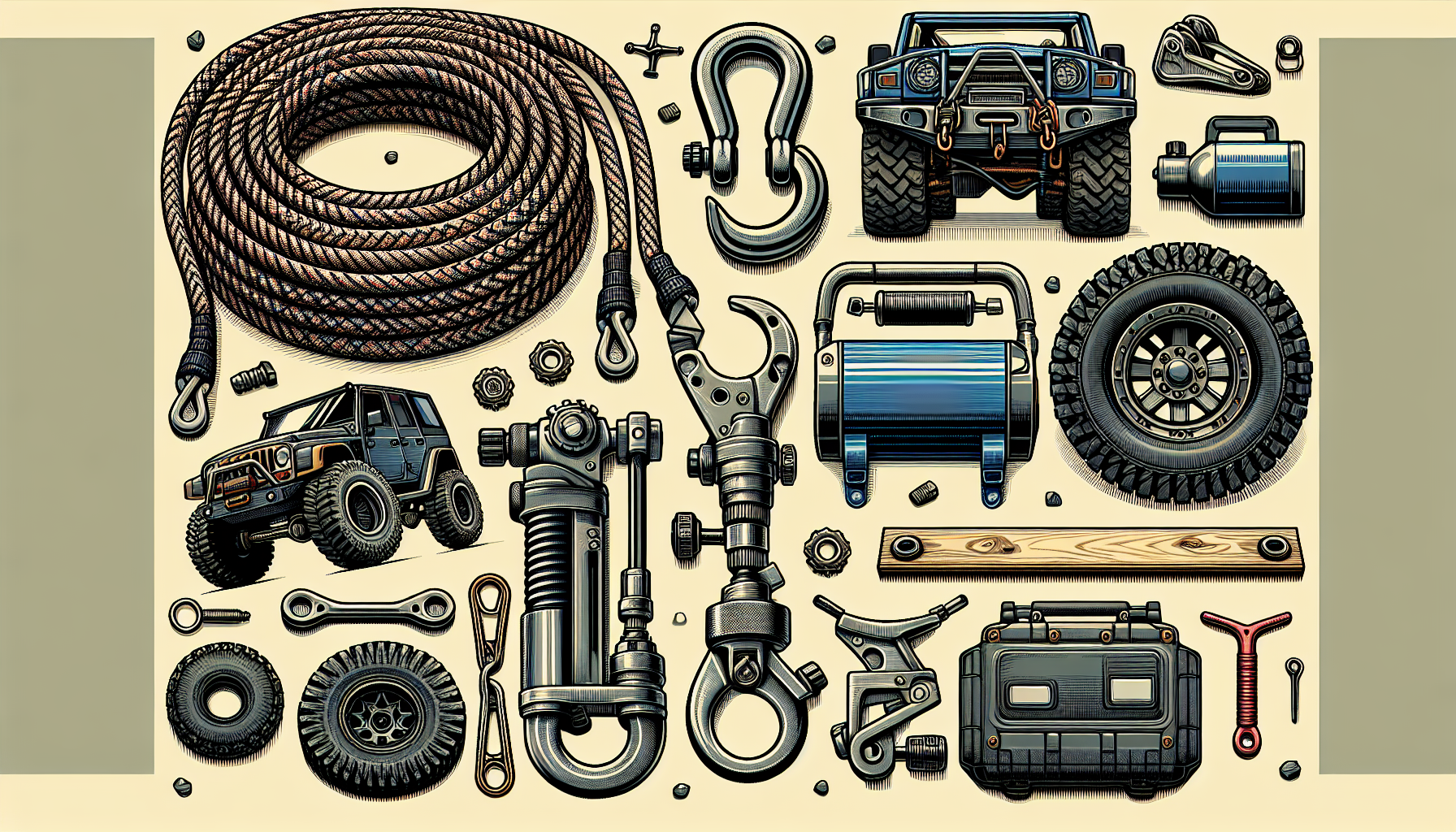
Snatch Straps: A kinetic snatch strap is invaluable for recovering a vehicle using the stored kinetic energy from another vehicle. These straps are designed to stretch, absorbing shock and providing a powerful, smooth pull. A quality snatch strap, rated for 2-3 times your vehicle's gross vehicle mass, will cost between $80 and $200. Always inspect straps for damage before and after use.
Soft Shackles and Bow Shackles: These are critical for connecting straps to recovery points. Soft shackles, made from synthetic rope, are increasingly popular due to their safety, weighing less and posing less risk if they break under tension. A pair of soft shackles costs approximately $50 to $100. Metal bow shackles, rated for heavy loads, are also effective but require more careful handling. Expect to pay $20 to $50 per shackle.
Winch and Winch Accessories: For solo recoveries or extremely difficult situations, a reliable winch is paramount. A high-quality electric winch can range from $500 to $2,000, depending on capacity and features. If your fleet operates in challenging, remote locations, a winch can be a game-changer. Remember to include a winch dampener, recovery gloves, and a tree trunk protector in your kit, totaling an additional $100 to $200, to ensure safe operation.
Air Compressor and Tire Deflator: Reducing tire pressure can significantly increase your vehicle's footprint and traction in soft terrain, often preventing a vehicle from getting stuck in the first place. A quality portable air compressor, costing $150 to $400, is essential for reinflating tires, and a rapid deflator, around $30 to $60, makes the process quick and accurate.
Beyond the Gear, Training and Preparation are Key
Possessing the best 4WD recovery gear is only half the equation, because without proper training and preparation, your investment remains underutilized and potentially dangerous. Think of it like a sophisticated piece of machinery; its effectiveness hinges on the operator's skill and understanding. Equipping your team with knowledge is as crucial as equipping your vehicles with hardware.
You should consider professional 4WD recovery training for all personnel operating your off-road fleet. These courses, often ranging from $300 to $800 per driver, cover safe recovery techniques, risk assessment, and proper equipment usage. This training reduces the likelihood of accidents, minimizes damage to vehicles and property, and significantly improves recovery times. An untrained team attempting a recovery can turn a simple vehicle extraction into a dangerous incident, causing injuries or further vehicle damage.
Preparation also includes a thorough understanding of your routes, potential hazards, and communication protocols. Before any journey into challenging terrain, ensure your team has a clear plan, knows how to call for help if needed, and understands the limitations of both their vehicle and their recovery equipment. A comprehensive pre-trip check of all 4WD recovery gear, including inspection for wear and damage, ensures everything is in optimal working order before departure.
Real-World Impact, Investing in Quality 4WD Recovery Gear Pays Off
Let's consider a practical scenario to illustrate the tangible return on investment for quality 4WD recovery gear and training. Imagine a surveying company operating in rural Australia, with a fleet of three 4WD vehicles. Their team often works in remote areas with unpredictable terrain, including sandy tracks and muddy access roads.
Before Investment: One morning, a key vehicle, carrying specialized equipment and a team of three, gets bogged deep in a muddy track, approximately two hours' drive from the nearest town. Without proper recovery gear or trained personnel, the team's options are limited. They spend six hours attempting self-recovery using rudimentary tools, causing minor damage to the vehicle's underside, before admitting defeat. They then wait an additional four hours for a commercial tow truck service, which charges $1,200 for the recovery due to the remote location. The total project delay costs the company an estimated $2,500 in lost billable hours for the team and equipment. This single incident results in $3,700 in direct and indirect costs, not accounting for the stress and lost momentum.
After Investment: Recognizing the recurring risk, the company invests in a comprehensive 4WD recovery gear kit for each vehicle, including snatch straps, soft shackles, an air compressor, and a portable winch, costing approximately $1,500 per vehicle, totaling $4,500 for the fleet. They also enroll their nine field staff in a certified 4WD recovery training course, an investment of $600 per person, totaling $5,400. The combined investment is $9,900.
Six months later, another vehicle gets bogged in similar conditions. However, this time, the team has the necessary 4WD recovery gear and the training to use it effectively. They assess the situation, deploy their snatch strap and recovery points, and recover the vehicle safely within 45 minutes. The project proceeds with minimal delay, costing the company less than $200 in minor operational downtime. The contrast is stark, the investment in gear and training averted significant financial loss and operational disruption, proving its value in just one incident.
Maintaining Your 4WD Recovery Gear for Peak Performance
Your 4WD recovery gear is a safety system, and like any critical equipment, it requires regular inspection and maintenance to ensure it performs when you need it most. Neglecting your gear can compromise its integrity, leading to equipment failure during a recovery attempt, which could be dangerous and costly. Implement a simple, systematic approach to care for your recovery equipment.
After each use, clean all gear thoroughly. Wash mud, sand, and salt from straps, shackles, and winching components with fresh water, then allow them to air dry completely before storing. Moisture can degrade materials and promote rust on metal components. Inspect straps and ropes for cuts, frayed edges, or signs of stretching and abrasion. Check metal shackles for cracks, bends, or corrosion. For winches, inspect the rope or cable for damage, ensure electrical connections are secure, and test the winch periodically to confirm it operates smoothly. Store your recovery gear in a designated, dry, and easily accessible location within your vehicles. A dedicated recovery bag or box keeps items organized and protected from UV exposure, which can weaken synthetic materials. Regularly scheduled checks, perhaps quarterly, ensure that all components are accounted for, in good condition, and ready for immediate deployment.
Supporting Your Overall Fleet Management Strategy
This discussion on 4WD recovery gear integrates directly into a broader strategy for fleet management, risk mitigation, and operational safety. By addressing the specific needs of off-road vehicle operations, this content reinforces the importance of preparedness, appropriate equipment, and skilled personnel, topics central to effective business operations with specialized vehicles.
Ensure Your Fleet is Always Prepared
Investing in the right 4WD recovery gear and comprehensive training is a proactive step toward protecting your assets, ensuring team safety, and maintaining operational continuity. Do not wait for an incident to highlight gaps in your preparedness. Take control of your off-road challenges today. Learn more about optimizing your fleet's readiness and capabilities by exploring our fleet management and safety consulting services, designed to keep your operations moving forward, no matter the terrain.
Comment