
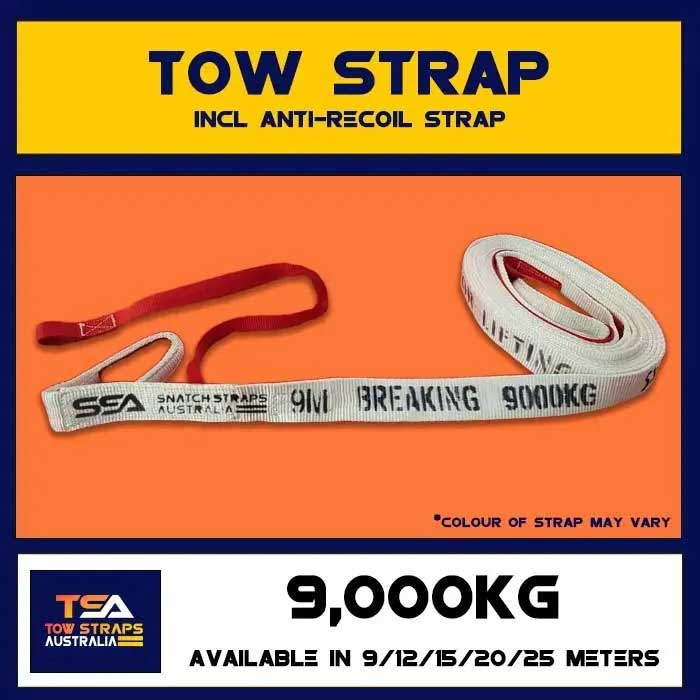
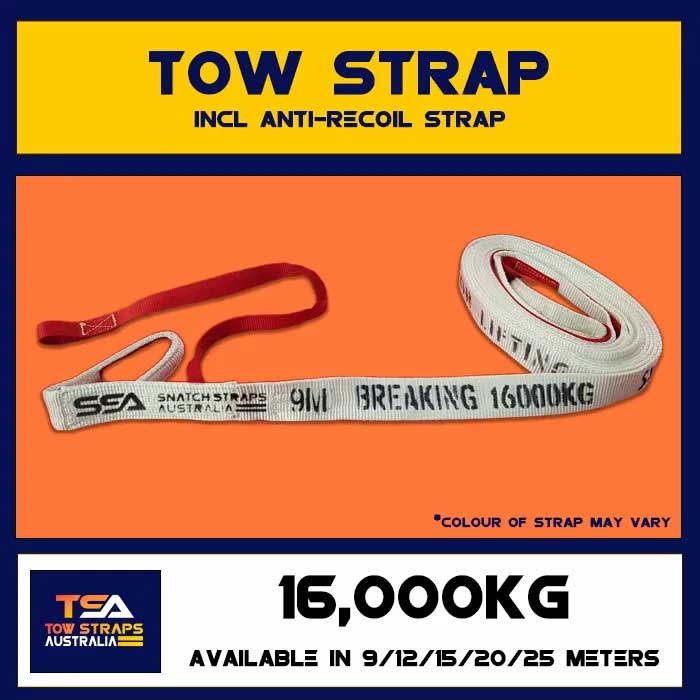
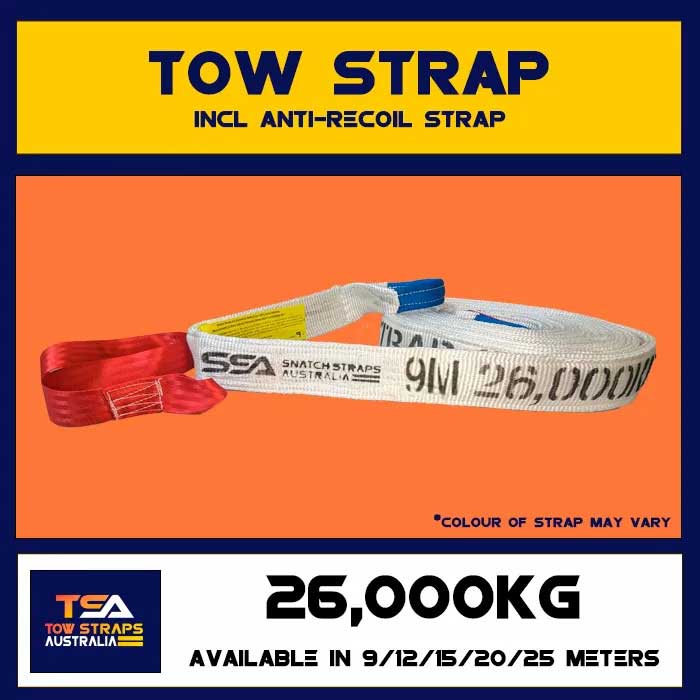
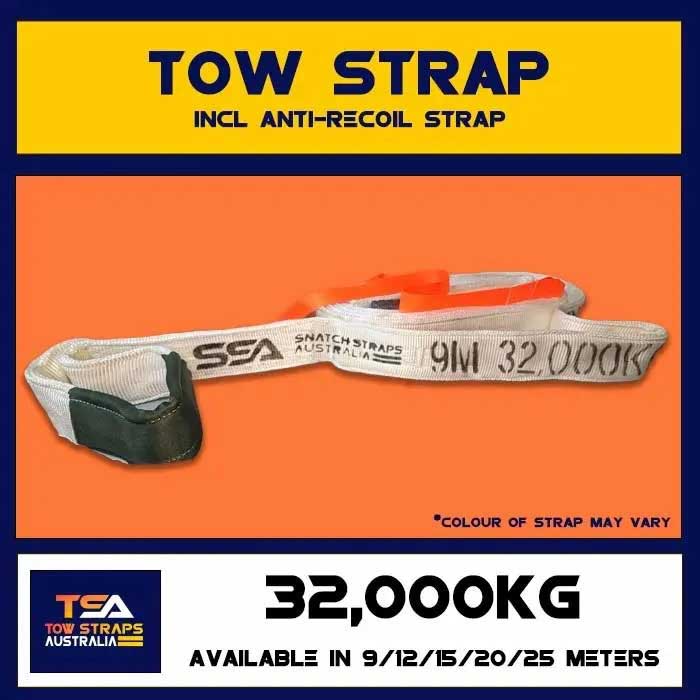
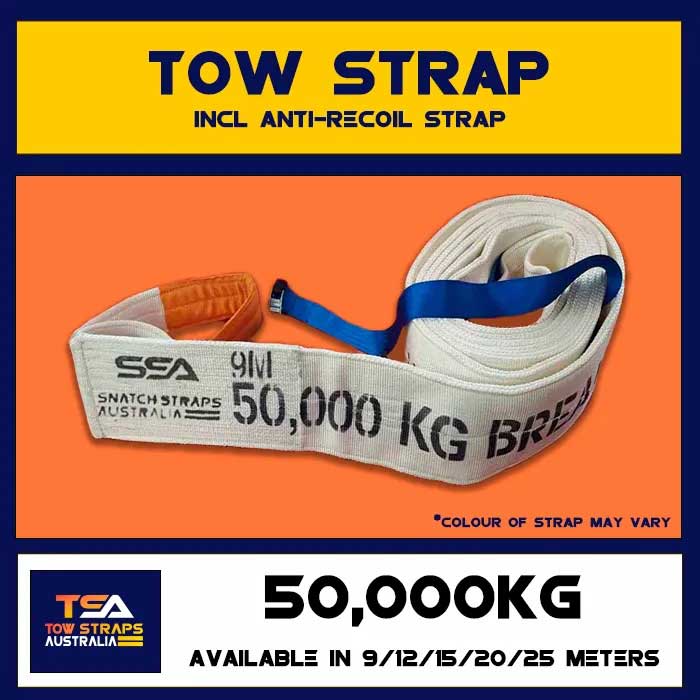
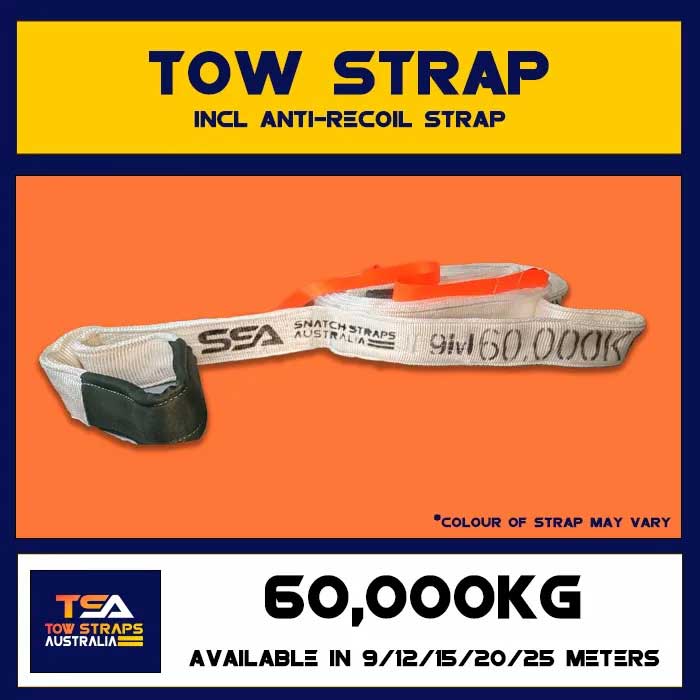
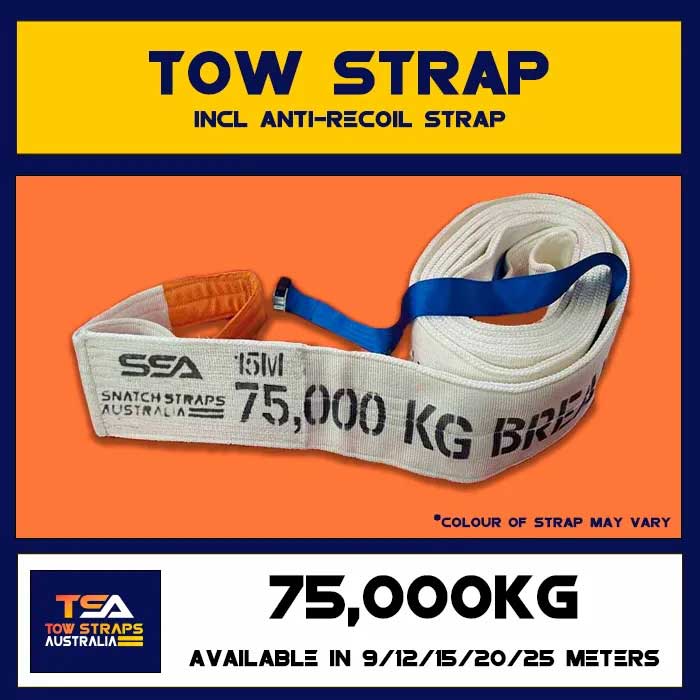
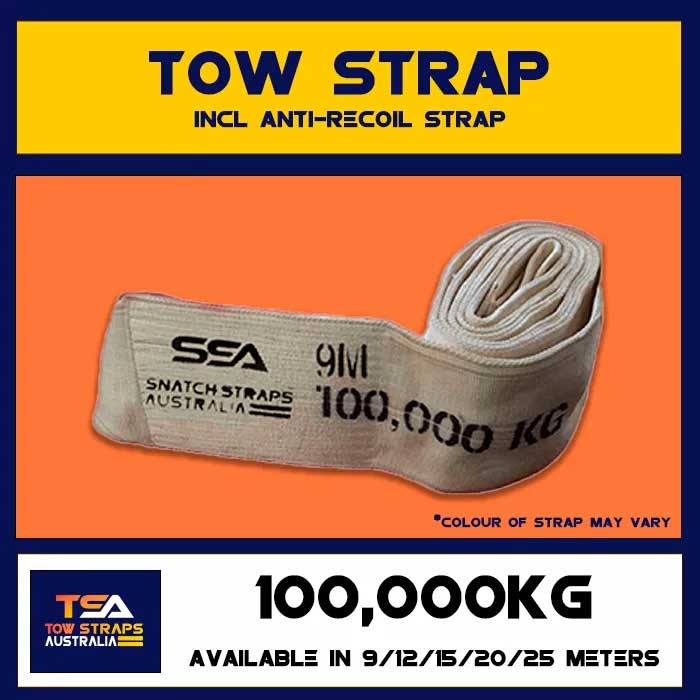
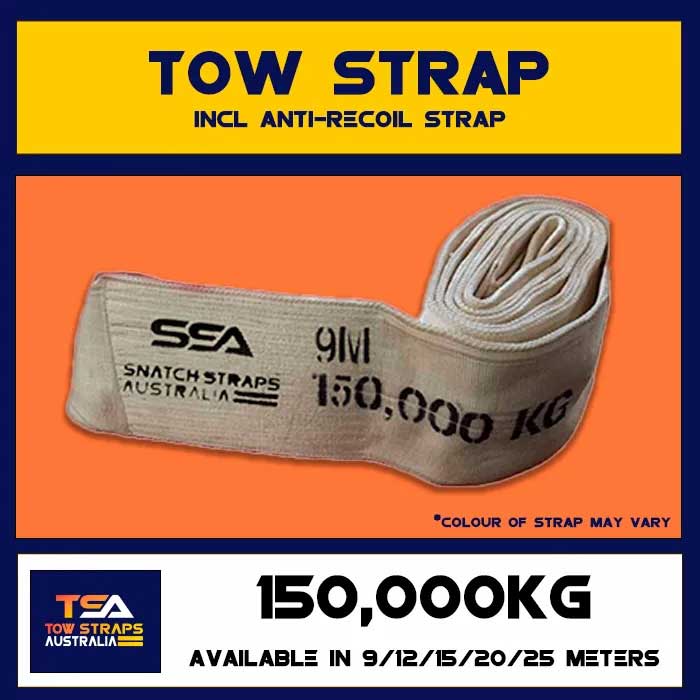
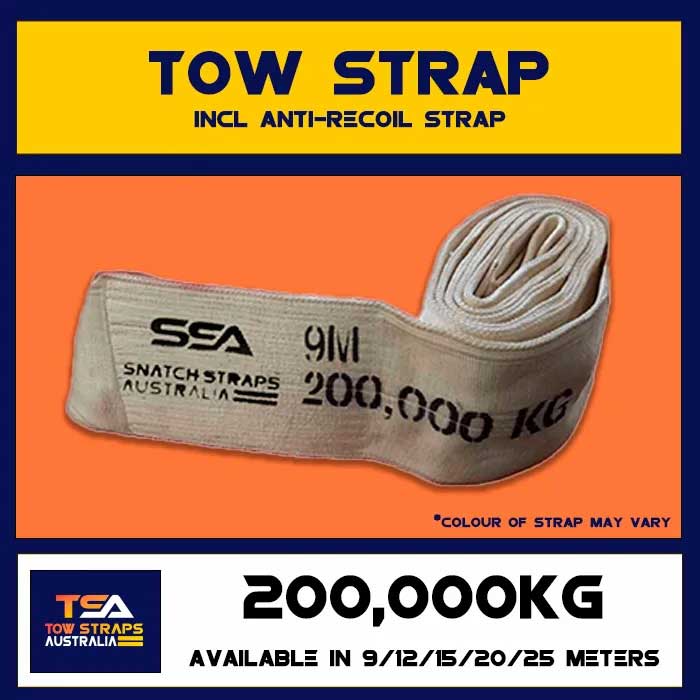
Tow straps are designed for static recovery and controlled towing of vehicles, trailers, equipment, and machinery. Unlike snatch straps, tow straps do not stretch, making them ideal for slow, steady pulls across roads, work sites, or recovery setups where kinetic energy isn't required.
Our collection includes flat tow straps in various lengths and load ratings, designed for use by recreational 4WDers, commercial fleets, farmers, tradies, and emergency services. Built with industrial-grade polyester and reinforced loops, SnatchStraps tow straps deliver maximum safety, durability, and performance in the harshest environments.
When to Use Tow Straps
Tow straps are essential for:
-
Pulling broken-down vehicles on sealed roads
-
Flat towing trailers, caravans, or agricultural equipment
-
Controlled recovery where minimal movement or bounce is preferred
-
Connecting to vehicles without rated recovery points (as a controlled pull, not recovery)
Tow straps provide direct pulling force with no recoil, making them safer in specific towing scenarios where smooth, linear movement is required.
Key Features of Our Tow Straps
Load Ratings and Capacities
Tow straps are available in multiple Working Load Limits (WLLs) and Breaking Strengths, ranging from light-use applications (1,500kg) to heavy-duty commercial scenarios (20,000kg+). Choose the strap based on your vehicle weight, towing distance, and anchor type.
Lengths and Widths
We offer tow straps in short lengths (2–4m) for tight, controlled movement and longer versions (6–10m) for trailer and machinery towing. Wider straps distribute load more evenly and reduce the risk of cutting or crushing.
Reinforced End Loops
All straps are stitched with high-tensile polyester threads and reinforced end eyes to ensure secure attachment to shackles, recovery points, or towing lugs.
Safety and Compatibility
-
Only attach tow straps to rated towing or recovery points
-
Avoid using with tow balls or bumper loops
-
Use steel or soft shackles to prevent metal-on-metal wear
-
Do not use tow straps in dynamic recoveries – use snatch straps instead
-
Always inspect for wear, cuts, frays, or UV damage before use
Tow Straps vs. Snatch Straps
| Tow Straps | Snatch Straps |
|---|---|
| No stretch | Elastic (stretches under load) |
| For slow pulls | For kinetic recovery |
| Safer for towing | Safer for bog recovery |
| Ideal on-road | Ideal off-road |
Both have a place in a complete recovery kit — always use the right strap for the situation.
Use Cases and Applications
-
Towing a dead car from a roadside
-
Pulling trailers without electric brakes
-
Agricultural towing of machinery or implements
-
Shifting vehicles on construction sites
-
Industrial material pulling or static load movement
FAQs
Can I use a tow strap for recovery?
Tow straps are not recommended for bogged or stuck vehicles due to their lack of elasticity. Use snatch straps or recovery ropes for kinetic recovery.
What’s the best length for a tow strap?
For vehicle-to-vehicle towing, 4 to 6 metres is common. For trailers or longer loads, 8 to 10 metres may be better. Always consider distance between vehicles and safety buffer.
Are these straps road legal in Australia?
Our straps are rated and marked according to industry standards. Always check local towing laws for compliance.
Note: Tow straps are specifically designed for towing purposes and should not be used for lifting or snatching. For personalized advice and assistance, please consult our team at Tow Straps Australia.