Essential Off-Road Recovery Gear: Your Ultimate Guide
Apr 17,2026
Off-Road Recovery Gear: Your Guide to Preparedness
Operating a business, or even pursuing a passion, that takes you off the beaten path requires more than just a capable vehicle. It demands preparedness, specifically, the right collection of off-road recovery gear. Imagine your fleet vehicle, or personal rig, stuck deep in mud, sand, or snow during a critical operation or an important leisure trip. That situation costs you time, money, and potentially puts your team or yourself at risk. Our position on this is clear: investing in quality off-road recovery gear is not an option, it is a fundamental requirement for anyone venturing beyond paved roads.
Ignoring this aspect of vehicle preparedness leaves you vulnerable to costly delays and damage. A proper recovery kit ensures you can handle unforeseen challenges independently, minimizing downtime and protecting your substantial investment in your vehicles. You avoid relying on expensive, time-consuming towing services that might take hours to reach you in remote locations. This proactive approach supports your operational efficiency and, most importantly, secures the safety of anyone operating your vehicles in challenging environments. Let's delve into the specific tools that form the backbone of a reliable off-road recovery kit.
Understanding Core Off-Road Recovery Gear Essentials
Building a robust off-road recovery gear kit begins with selecting essential tools that address common recovery scenarios. Each piece serves a specific purpose, working together to get your vehicle unstuck safely and efficiently.
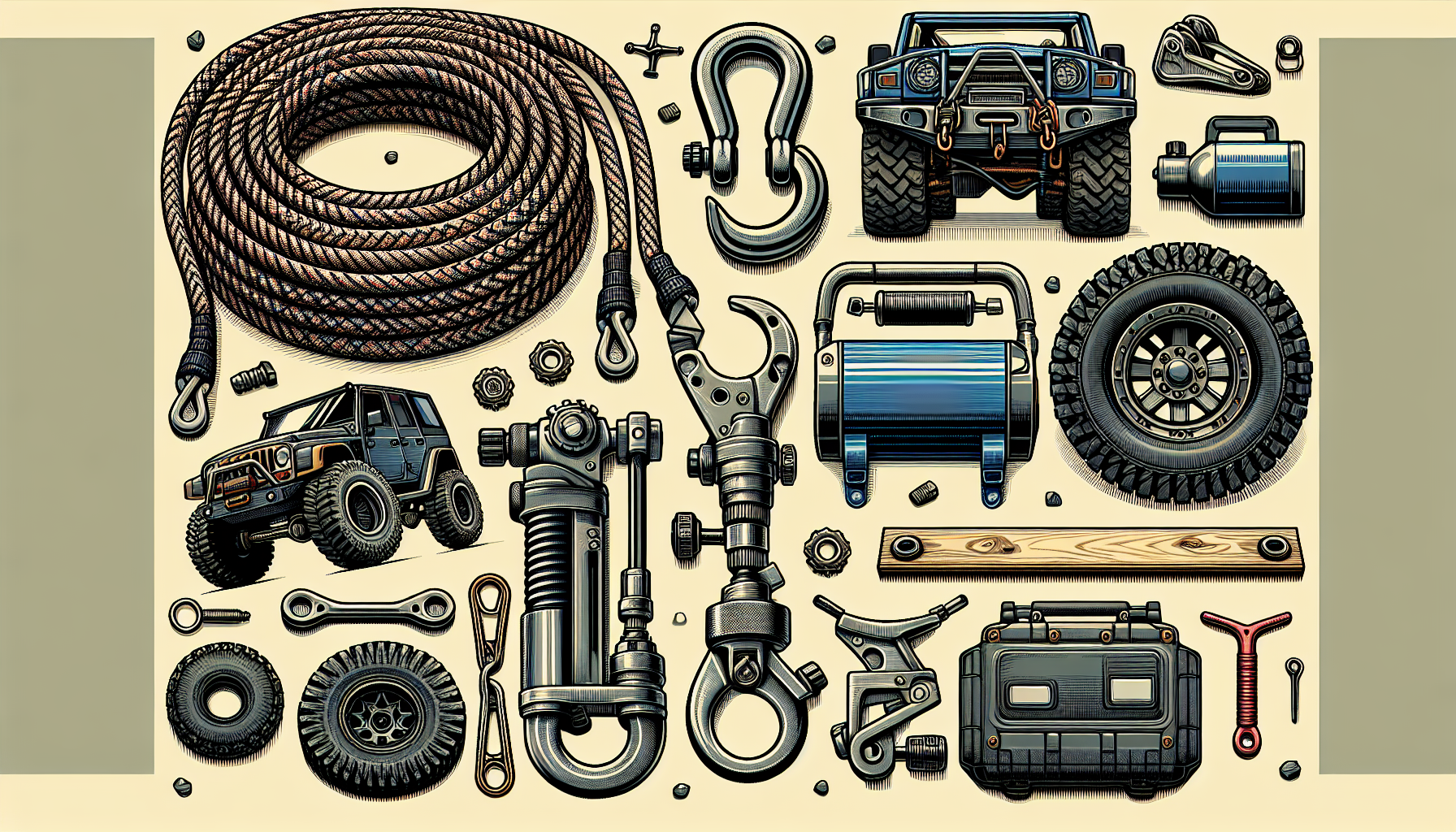
Winches: A winch is often the first item considered for serious recovery. You have options like electric or hydraulic models. Electric winches, common for recreational and light commercial use, typically range from 9,000 to 12,000 pounds in pulling capacity and cost between $400 and $2,000, depending on features and brand. Hydraulic winches offer sustained pulling power and are often found in heavy-duty commercial applications, with prices often starting at $1,500 and going much higher. Choose a winch rated for at least 1.5 times your vehicle's Gross Vehicle Weight Rating, GVWR, to ensure it handles the load effectively.
Recovery Straps and Ropes: These are crucial for various recovery methods. Kinetic recovery ropes, also known as snatch ropes, stretch to create kinetic energy, effectively snatching a stuck vehicle free. These cost between $80 and $250 and typically have breaking strengths from 20,000 to 30,000 pounds. Static tow straps, in contrast, offer a firm pull and are suitable for towing or securing. They generally cost $50 to $150. Always match the strap or rope's breaking strength to your vehicle's weight and the anticipated load.
Hi-Lift Jacks: A versatile tool for lifting vehicles in uneven terrain, a Hi-Lift jack can raise a vehicle to change a tire, clear obstacles, or assist with repositioning. These mechanical jacks typically lift up to 7,000 pounds and range in price from $100 to $300. You must learn proper usage and safety protocols before deploying one, as they can be dangerous if used incorrectly.
Shackles and Pulleys: Shackles, often D-ring or bow shackles, connect recovery straps to anchor points or your vehicle's recovery points. Always use shackles made from forged steel with clear working load limits, WLL. A pair typically costs $20 to $100. Pulley blocks, also called snatch blocks, double your winch's pulling power and allow for directional changes in recovery efforts. Expect to pay $50 to $150 for a quality snatch block.
Traction Boards: These robust, textured boards provide a solid surface for tires to gain traction in sand, mud, or snow. They are simple to use, requiring you to wedge them under the drive wheels. A pair of quality traction boards typically costs between $150 and $400. They are a quick and effective solution for less severe stuck situations.
Planning Your Off-Road Recovery Kit: A Practical Approach
As a business owner, assembling an off-road recovery kit needs a strategic approach. You must consider the specific needs of your operations and the environments your vehicles encounter. Start by assessing your vehicle type, whether it is a lightweight ATV or a heavy-duty work truck, and the typical terrains your team navigates. Do you primarily deal with deep mud, loose sand, rocky trails, or snow?
Next, consider the remoteness and duration of your trips. Longer trips into isolated areas necessitate a more comprehensive kit, including redundant items or specialized tools. Also, think about the physical space available in your vehicle for storing off-road recovery gear and how much additional weight you can carry without compromising performance or fuel efficiency. You can find quality gear across various price points, so budget for durable, reliable components from reputable manufacturers. Investing a little more upfront in proven gear prevents failures when you need it most.
Consider this practical example. A small environmental surveying company operates a fleet of four-wheel-drive trucks, often accessing remote sites with challenging dirt roads. Before they standardized their off-road recovery gear, a truck once became stuck in a muddy access road. The crew spent four hours waiting for a local tow service, which cost the company $500 for the call-out. This incident resulted in a full day of lost productivity for a two-person team, totaling an additional $800 in wages, plus the tow fee, equaling $1,300 for a single incident.
After implementing a standardized recovery kit, including a 12,000-pound electric winch, a kinetic recovery rope, and a set of traction boards, the company experienced another similar stuck situation two months later. This time, the crew used their onboard off-road recovery gear to self-recover the vehicle in just 30 minutes. This saved the company the $500 tow fee and prevented significant downtime, demonstrating a clear, measurable return on their initial investment in preparedness.
Safety Protocols and Best Practices for Using Off-Road Recovery Gear
Proper use of off-road recovery gear is just as important as having the gear itself. Safety must always be your top priority. Begin every recovery scenario with a thorough assessment of the vehicle's situation, the terrain, and potential anchor points. Ensure that all recovery points on your vehicle and the anchor vehicle are rated for recovery use and are in good condition.
Before initiating any pull, clear the area of bystanders and ensure everyone involved understands their role and communication signals. Keep a safe distance, remembering that kinetic ropes and winch lines store significant energy and can become dangerous projectiles if they fail. For winch recoveries, place a damper or heavy blanket over the winch line to help mitigate recoil if a break occurs. Always wear heavy-duty gloves to protect your hands when handling lines and shackles.
Inspect all your off-road recovery gear regularly for wear and tear. Damaged straps, frayed winch lines, or bent shackles must be replaced immediately. Provide your team with basic training on how to use each piece of equipment safely and effectively. Understanding the principles of vehicle recovery, such as dynamic versus static pulls, and load distribution, reduces risks and increases the success rate of any recovery operation.
Supporting Your Journey Through Comprehensive Content
This discussion on essential off-road recovery gear is part of a broader content strategy focused on vehicle preparedness, outdoor safety, and operational efficiency for businesses and enthusiasts alike. Our aim is to build a rich resource hub that helps you navigate complex challenges, whether on the trail or in your business operations. This post contributes to a keyword cluster that emphasizes not just having the right tools, but understanding their application and safe usage, ensuring you are prepared for anything.
Preparing your vehicles for the unknown is a smart business decision, protecting your assets and your people. If you want to learn more about optimizing your fleet for rugged environments, exploring advanced vehicle modifications, or ensuring your business operations are as robust as your equipment, we invite you to explore our other resources. We provide insights to help you make informed choices for your specialized needs.
Comment