Your Complete 4WD Lift Kit Guide: Choosing the Right Setup
Apr 15,2026
4WD Lift Kit Guide: Elevate Your Off-Road Experience
Many 4WD owners encounter limitations when tackling challenging terrain. Your vehicle might scrape its undercarriage, struggle with articulation, or simply lack the aggressive stance you desire. A well-chosen 4WD lift kit addresses these issues, transforming your stock vehicle into a capable off-road machine. This comprehensive 4WD lift kit guide helps you navigate the options, understand the costs, and make an informed decision for your vehicle. We provide practical, specific insights, drawing on years of experience in vehicle modification. You deserve to maximize your off-road adventures, and selecting the correct lift kit is a significant step toward achieving that goal. We help you cut through the confusion and identify the best solution to meet your driving needs, ensuring your investment enhances both performance and appearance.
Understanding Different 4WD Lift Kit Types for Your 4WD Lift Kit Guide
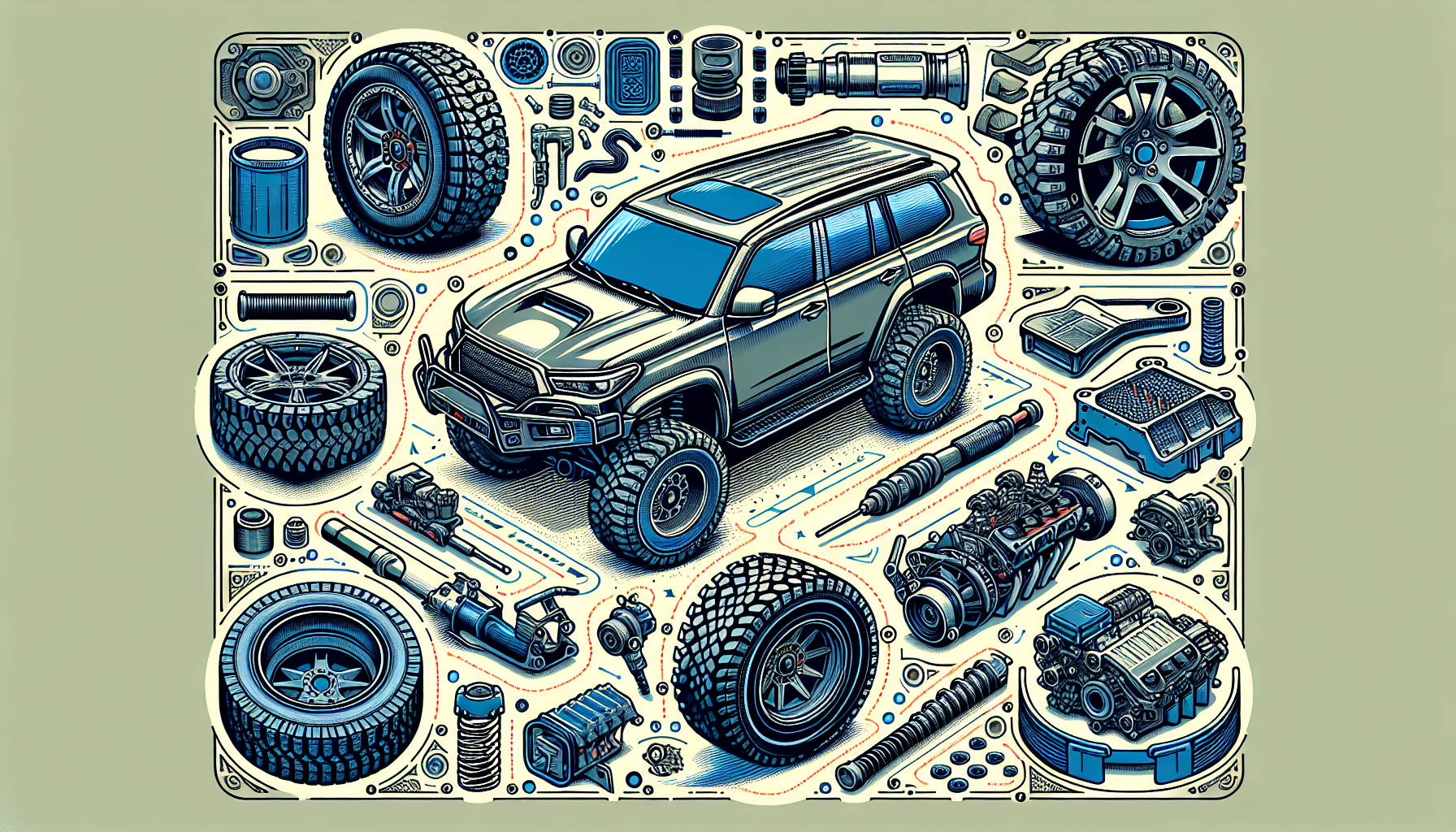
Choosing the correct 4WD lift kit requires understanding distinct categories, each with specific advantages and drawbacks. Your vehicle's intended use dictates this selection. We cover three common types: leveling kits, body lifts, and suspension lifts.
Leveling Kits: Simple Front-End Solutions
Leveling kits raise your vehicle's front by 1 to 2.5 inches, correcting the factory rake. These kits use spacers and are the most affordable and simple to install, allowing for slightly larger tires, up to 33 inches. However, they offer minimal overall ground clearance increase and do not enhance suspension travel.
Body Lifts: Cost-Effective Clearance
Body lifts increase the space between the frame and body, typically 1 to 3 inches, using blocks at the body mounts. They provide additional tire clearance without altering suspension geometry or ride quality. A limitation is that ground clearance at the differentials remains unchanged, and the visible gap may require cosmetic covers.
Suspension Lifts: Comprehensive Performance
Suspension lifts are ideal for serious off-road performance. They replace or modify major suspension components, providing 2 to over 8 inches of lift. This significantly increases ground clearance, suspension travel, and articulation, accommodating larger tires, often 35 inches or more. These kits are the most expensive and complex, often requiring professional installation to manage driveline and steering adjustments.
Cost Considerations for Your 4WD Lift Kit
The financial investment for a 4WD lift kit varies significantly based on kit type, brand reputation, and installation choice. Budgeting effectively requires understanding these factors.
Leveling kits are the most budget-friendly, typically costing $100 to $300 for parts. Body lifts range from $200 to $600 for the kit. Suspension lifts escalate considerably, from $500 for basic kits to over $5,000 for high-performance systems. For example, a quality 3-inch suspension lift for a Toyota Tacoma might cost $1,500 to $3,000 for components alone.
Installation costs are additional. While some DIY is possible for leveling or body lifts, suspension lifts often require professional expertise. Expect $150 to $400 for leveling kit installation, $300 to $700 for a body lift. Complex suspension lift installations can range from $600 to $1,500 or more, covering labor and a necessary wheel alignment.
Installation and Performance: A Before-and-After Example
Proper installation ensures your 4WD lift kit performs safely and reliably. Incorrect installation leads to dangerous handling or costly component failures. We recommend professional installation, especially for suspension systems, to guarantee proper alignment and function.
A 2019 Jeep Wrangler JL Sahara, with its factory 9.7 inches of ground clearance, often scraped its differential on moderate trails. Its approach angle was 41.4 degrees, and departure angle was 36.1 degrees.
After installing a 2.5-inch MetalCloak Game-Changer Lite suspension lift, the vehicle transformed. Ground clearance increased to 12.2 inches. Obstacles previously causing scrapes were now cleared easily. The approach angle improved to 47 degrees, and departure angle to 40 degrees, enabling the Jeep to tackle steeper terrain. The upgraded suspension also offered a smoother ride. This example clearly shows the tangible performance gains from a quality lift kit.
Choosing Complementary Tires and Wheels
A lift kit benefits significantly from larger tires and compatible wheels, which further boost ground clearance and traction. Ensure your chosen tire size matches your lift and gearing to prevent rubbing and maintain drivability. A 2.5-inch Wrangler lift typically fits 35-inch tires. Proper wheel offset is also crucial for correct steering geometry.
Supporting Your Off-Road Journey
This comprehensive 4WD lift kit guide serves as a foundational resource within a broader ecosystem of content focused on vehicle customization and off-road enhancements. By delving into the specifics of lift kits, including their types, costs, and practical applications, we build topical authority around crucial modification decisions. This article helps you understand the initial steps of upgrading your 4WD, setting the stage for discussions on related topics such as tire selection, suspension tuning, differential upgrades, and recovery gear. Our aim is to provide you with the knowledge needed to confidently plan your vehicle's evolution, ensuring every modification contributes to a more capable and enjoyable off-road experience.
Are you ready to transform your 4WD and unlock its full off-road potential? We specialize in helping vehicle owners like you make informed decisions about modifications, ensuring you get the performance and capability you desire. Contact us today to discuss your specific needs and let our experts guide you through the process of selecting and installing the perfect lift kit for your adventure vehicle. We are here to help you build the ultimate off-road machine.
Comment