Essential 4WD Upgrades for Enhanced Performance
Apr 20,2026
Essential 4WD Upgrades for Your Off-Road Adventures
Many 4WD owners buy a vehicle thinking it is ready for any challenge, but stock setups often limit true off-road capability. You might face frustrating moments on tougher trails, risking vehicle damage or getting stuck in remote areas. That feeling of uncertainty, wondering if your vehicle can handle the next obstacle, takes away from the adventure. We understand the desire to push your vehicle further and the need for reliable, confident performance when you leave the paved road. Choosing the correct essential 4WD upgrades transforms your vehicle, offering increased safety, capability, and enjoyment on demanding terrain. This guide helps you invest wisely, ensuring you get the most out of your 4WD without unnecessary expenses. A properly upgraded vehicle minimizes trail risks and enhances your overall adventure experience, allowing you to explore with greater confidence and less worry.
Suspension Systems, The Foundation of Essential 4WD Upgrades
Your vehicle's suspension system serves as its foundation, directly impacting both off-road capability and on-road comfort. A factory suspension often compromises between handling pavement and tackling trails, leaving it inadequate for serious off-road demands. Upgrading your suspension provides increased ground clearance, better articulation, and improved damping, which translates to a more controlled and comfortable ride over rough terrain.
You can choose from various types of suspension enhancements. A common upgrade involves installing a lift kit, which can range from a simple spacer lift to a full coilover conversion. A 2-inch lift kit, for instance, typically costs between $1,500 and $4,000 installed, depending on components and vehicle type. This type of lift offers improved ground clearance by several inches, allowing you to clear obstacles that would otherwise cause damage. Upgraded shocks, such as remote reservoir units, might add $800 to $2,500 per set. These units significantly improve damping on corrugated roads or during high-speed desert runs, preventing shock fade and maintaining ride quality.
Consider this practical example, a stock Toyota Tacoma with 9 inches of ground clearance struggles over a rocky section, scraping its undercarriage. The driver feels every bump harshly, reducing comfort and control. With a 2.5-inch lift and heavy-duty coilovers, the same Tacoma now boasts 11.5 inches of ground clearance. It clears obstacles easily, preventing costly underbody damage. Furthermore, the ride quality becomes smoother over washboards, allowing for faster, more controlled travel on rough trails. You experience less fatigue and greater confidence, enabling longer, more enjoyable expeditions.
Protecting Your Investment, Underbody Armor and Recovery Gear
Off-road driving inevitably exposes your vehicle's underside to rocks, stumps, and other hazards. Without proper protection, a single impact can lead to expensive repairs for vital components like your oil pan, transmission, or transfer case. Investing in underbody armor is a proactive step that safeguards your vehicle and prevents trailside breakdowns.
Skid plates, often made from robust steel or lightweight aluminum, cover critical areas. Full underbody skid plate sets for the engine, transmission, and transfer case can cost anywhere from $300 to $1,000 per section, depending on the material and specific vehicle. Rock sliders, which protect your rocker panels from severe damage, are another essential component, typically costing $700 to $1,500. These reinforcements absorb impacts, distributing the force and preventing structural damage to your vehicle's body.
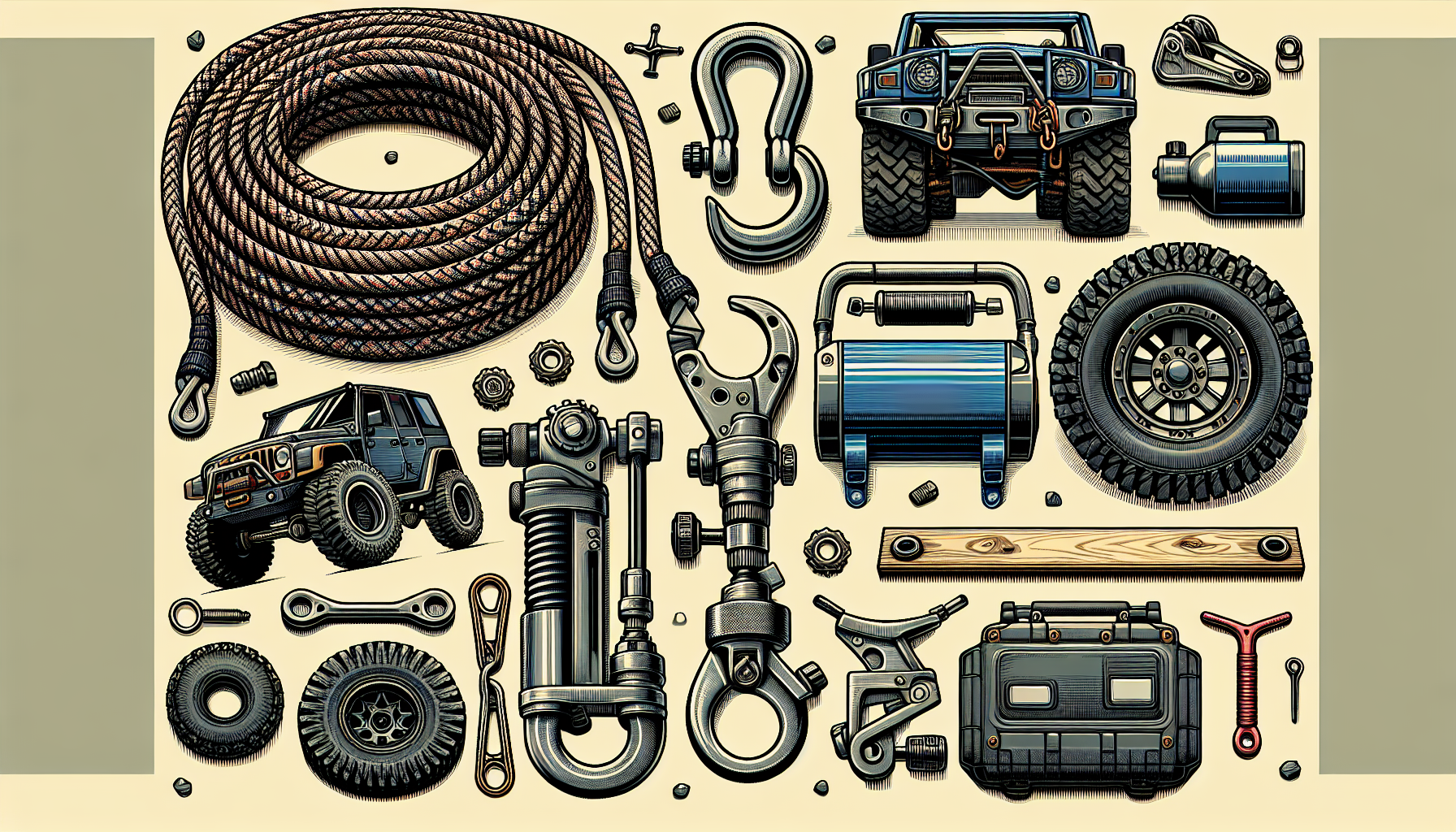
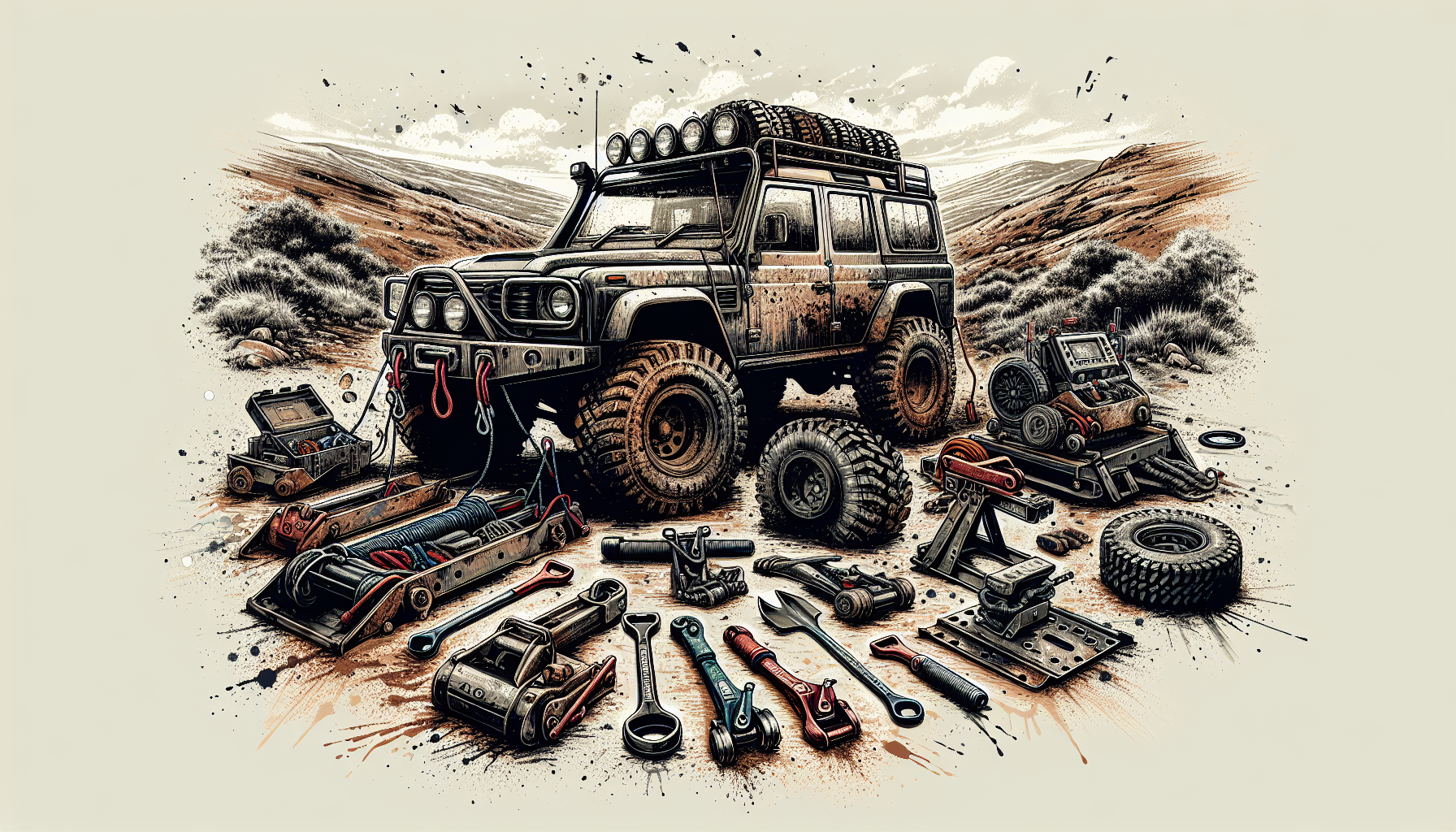
Beyond protection, having reliable recovery gear is non-negotiable for safe off-road travel. Getting stuck is not a matter of if, but when. A quality winch, for example, one with a 10,000-pound capacity, ranges from $500 to $1,500. This piece of equipment is often your best friend when faced with mud, sand, or steep inclines. A complete recovery kit, including a snatch strap, D-ring shackles, and a tree saver, typically costs $200 to $500 and allows for safe self-recovery or assisted recovery. Additionally, an onboard air compressor, costing $300 to $800, lets you adjust tire pressure for different terrains and quickly reinflate for highway travel, a crucial part of any recovery plan.
Power and Traction, Tires, Lockers, and Engine Performance, Essential 4WD Upgrades
When you venture off-road, your tires are the single most important factor for traction, making them one of the most impactful essential 4WD upgrades. Factory tires are designed for street use and offer minimal grip on loose dirt, rocks, or mud. Upgrading to appropriate off-road tires dramatically improves your vehicle's ability to maintain traction and navigate challenging terrain.
You can choose between all-terrain and mud-terrain tires, depending on your primary use. A set of four quality all-terrain tires typically costs $1,000 to $2,000, providing a good balance of off-road grip and on-road manners. Mud-terrain tires, while excellent in extreme conditions, can be louder on the highway. Be aware that increasing tire size often necessitates suspension changes to prevent rubbing and may require regearing your differentials to restore optimal power and fuel economy. For example, a Jeep Wrangler on street tires often spins helplessly in soft sand. Upgrading to 33-inch mud-terrain tires, with lower tire pressure such as 15 PSI, provides significantly more flotation and grip, allowing it to traverse the same soft sand with ease.
Differential lockers provide maximum traction when one or more wheels lose grip. These devices force both wheels on an axle to spin at the same rate, crucial for climbing steep, loose inclines or navigating extremely uneven terrain. You can find air lockers or electric lockers, with costs ranging from $1,000 to $2,500 per axle, plus installation. This upgrade is invaluable for serious rock crawling or very muddy conditions. Furthermore, enhancing engine performance can provide a noticeable boost, especially when carrying heavy loads or tackling steep climbs. An ECU tune might add 20 to 50 horsepower and improve torque delivery, costing $500 to $1,200. Cold air intakes offer minor gains for $200 to $500. These upgrades ensure your vehicle has the necessary power to overcome obstacles effectively.
Lighting and Communication for Safety and Visibility
Exploring off-road often means driving in low-light conditions or even through the night. Your factory headlights, while adequate for paved roads, rarely provide the illumination needed to safely navigate trails, spot wildlife, or identify obstacles in challenging environments. Auxiliary lighting is a critical safety upgrade that enhances your visibility and reaction time.
LED light bars and powerful driving lights are popular choices. A good quality 20-inch LED light bar can range from $100 to $500, offering a broad spread of light directly in front of your vehicle. A pair of dedicated driving lights, designed for focused, long-distance illumination, might cost $150 to $600. These additions drastically improve visibility during night driving, whether off-road or on remote tracks, preventing collisions with wildlife or unseen obstacles like ditches and fallen trees. You gain the ability to see further and wider, making your nighttime adventures safer and more enjoyable.
Effective communication is equally important, particularly when traveling in groups or venturing into areas without cell service. A reliable communication system ensures you can contact your companions or call for help in an emergency. A quality UHF radio system costs $200 to $600 and allows for clear, short-range communication with other vehicles in your convoy. For more remote excursions, satellite communicators, such as a Garmin inReach, are essential. These devices typically cost $300 to $500 upfront, plus a monthly subscription, and provide two-way messaging, GPS tracking, and an SOS function anywhere in the world. This ensures you are never truly out of reach, providing peace of mind during your adventures.
Supporting Your Off-Road Knowledge
This post provides comprehensive advice on enhancing your 4WD capabilities, forming a core resource for anyone researching vehicle modifications. This content strengthens your understanding of vital improvements for your off-road vehicle, positioning us as a reliable source for practical 4WD advice. You now have a clearer picture of how specific essential 4WD upgrades contribute to a more capable and enjoyable off-road experience.
Making informed decisions about your 4WD upgrades ensures you maximize your investment and enhance your off-road experiences. If you need assistance planning your vehicle build, selecting the right components, or finding experienced installers, contact us today. Our team can help you navigate the options and achieve your off-road goals.
Comment