Essential Off-Road Recovery Gear for Safe Adventures
Apr 20,2026
Equipping Your Rig, Mastering Off-Road Recovery Gear for Every Adventure
Heading off the beaten path promises excitement, freedom, and unforgettable experiences. However, the wilderness can quickly turn treacherous, leaving your vehicle stranded and your adventure stalled. Picture this, you are miles from the nearest paved road, the sun is setting, and your tires are buried deep in mud or sand. Without the right off-road recovery gear, a thrilling day can become a costly and dangerous ordeal. As experts in vehicle preparation and customization, we understand the critical importance of being self-sufficient in challenging terrain. Equipping your vehicle with reliable off-road recovery gear is not just about avoiding a tow bill, it is about ensuring your safety, protecting your investment, and preserving the enjoyment of your journey. Proper gear empowers you to handle unexpected situations with confidence, allowing you to explore further and worry less. This guide will walk you through the essential tools and techniques you need to navigate any recovery situation effectively.
Essential Off-Road Recovery Gear Every Adventurer Needs
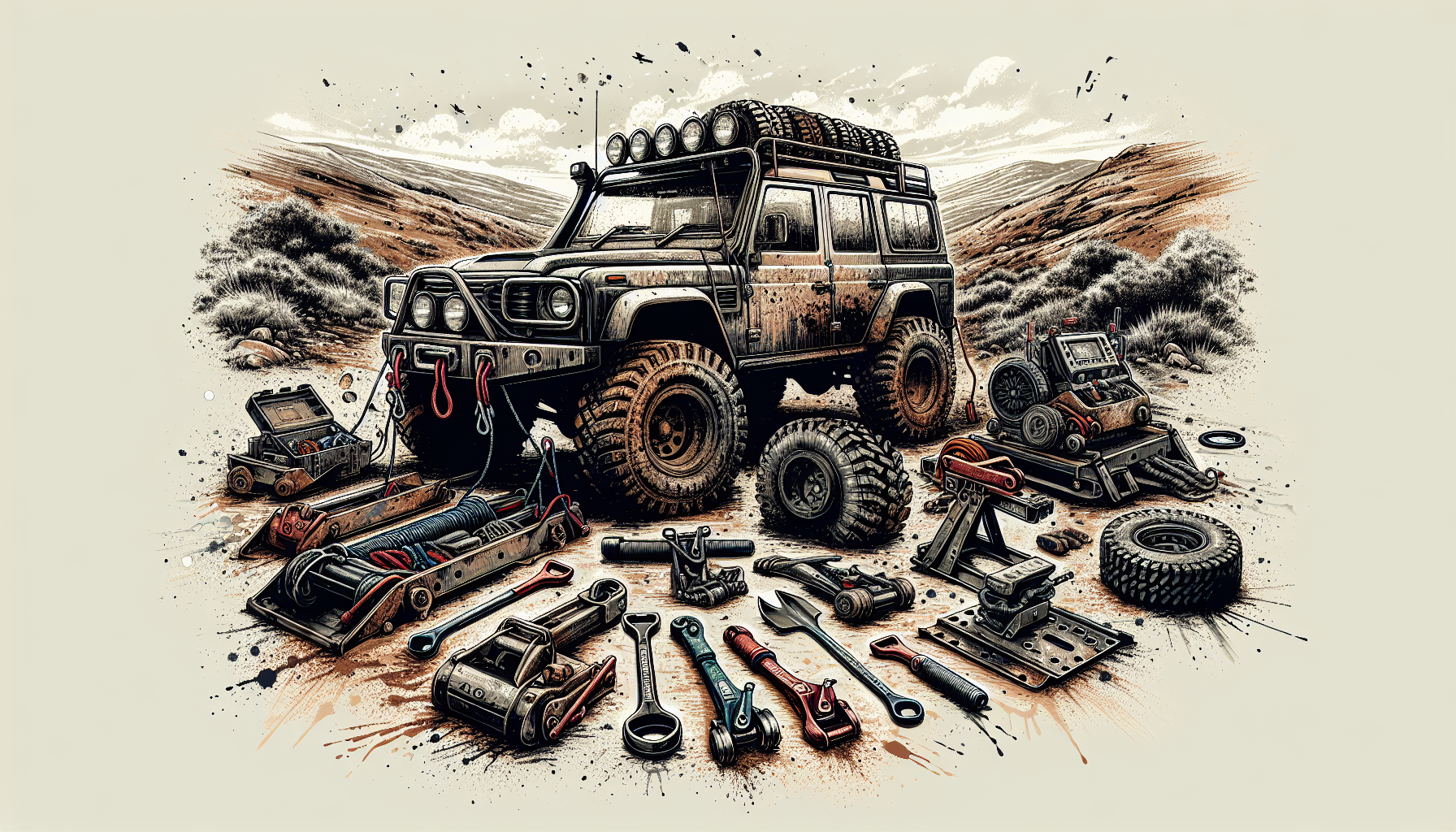
Preparation is the key to successful off-road travel. Carrying a well-thought-out collection of off-road recovery gear can mean the difference between a quick self-recovery and a prolonged, expensive, or even dangerous predicament. Here are the core items you should consider for your kit, along with practical insights:
Winch: A winch is perhaps the most powerful piece of recovery equipment you can own. For most full-size SUVs and trucks, a winch with a pulling capacity between 9,000 and 12,000 pounds is appropriate. Electric winches, costing anywhere from $400 for basic models to over $2,000 for high-performance units, are common due to their ease of use. Ensure your winch is properly mounted to a sturdy bumper or frame for maximum effectiveness and safety. Remember to spool it under tension regularly to prevent tangles.
Recovery Straps and Ropes: These are fundamental for various recovery scenarios. You will want at least two types, a kinetic recovery rope, also known as a snatch strap, and a static tow strap. Kinetic ropes, typically priced between $80 and $250, stretch to build kinetic energy, gently pulling a stuck vehicle free. A good kinetic rope will have a breaking strength of at least two to three times your vehicle’s gross vehicle weight. Static tow straps, costing $50 to $150, are useful for controlled pulls and protecting other gear. Always use straps rated for heavy-duty recovery, not simple towing straps.
Shackles: Shackles connect your recovery straps or winch line to secure points on your vehicle or an anchor. Both D-ring shackles (metal) and soft shackles (synthetic) are vital. D-ring shackles, typically $20 to $80 each, must be load-rated and used correctly. Soft shackles, ranging from $40 to $100 each, are lighter, safer, and less likely to damage your vehicle if they fail. Always ensure your shackles are rated for the loads you expect to encounter.
Snatch Block: This simple yet ingenious device, costing $30 to $100, doubles your winch’s pulling power or changes the direction of your pull, which is invaluable when a direct line is not possible. A snatch block allows you to reduce the strain on your winch motor and battery, prolonging its life and efficiency.
Hi-Lift Jack: While requiring careful use, a Hi-Lift jack, priced from $100 to $300, is a versatile tool for lifting your vehicle, changing tires in uneven terrain, or even acting as a manual winch over short distances. Always use a jack base to prevent sinking into soft ground and observe strict safety protocols when operating one.
Shovel and Traction Boards: Do not underestimate the power of basic tools. A sturdy shovel, costing $20 to $50, helps clear debris or dig out tires. Traction boards, or recovery boards, priced from $150 to $400 for a pair, provide an essential surface for tires to grip when stuck in sand, mud, or snow. They are often the first line of defense in a recovery situation and are remarkably effective for self-recovery.
Mastering Safe Recovery Techniques and Principles
Possessing the right off-road recovery gear is only half the battle, knowing how to use it safely and effectively is paramount. Rushing into a recovery can lead to vehicle damage, injury, or further entanglement. Always approach a recovery situation with a clear head and a plan.
Assess the Situation: Before touching any gear, stop and evaluate. What is the vehicle stuck in, how deep, what is the terrain like around it? Identify potential anchor points, such as sturdy trees or other vehicles, and consider their integrity. The goal is to minimize risk and maximize efficiency.
Prioritize Safety: Always wear gloves, especially when handling winch lines or dirty gear. Ensure all bystanders are at a safe distance, well clear of any lines under tension. Never stand between a vehicle and its anchor point or near lines under load, as equipment failure can result in dangerous projectiles. Communicate clearly with anyone assisting you, establishing hand signals if necessary.
Utilize Proper Attachment Points: Attach recovery gear only to designated recovery points on your vehicle. These are typically reinforced frame points or aftermarket bumpers with recovery shackle mounts. Never attach to axles, suspension components, or tow balls, as these are not designed for recovery forces and can fail catastrophically.
Execute Kinetic Recovery with Care: When using a kinetic recovery rope, ensure both vehicles have secure recovery points. The pulling vehicle should take up the slack slowly and then accelerate smoothly, allowing the rope to stretch and gently extract the stuck vehicle. Avoid jerky movements or excessive speed, as this can shock-load the rope and attachment points.
Winching Operations: When winching, lay out the winch line carefully, avoiding kinks. Secure the line to your anchor point using a tree saver strap to protect the tree. If using a snatch block, position it to optimize your pull direction and power. Always use a winch damper or blanket over the line to absorb energy if the line breaks. Engage the winch slowly and consistently, monitoring the line and the stuck vehicle’s movement. A brief pause during the pull allows the winch motor to cool down.
Traction Board Deployment: When stuck in mud or sand, clear away excess material from around the tires. Wedge the traction boards firmly under the drive tires, pointing in the direction you want to go. Apply gentle, consistent throttle to allow the tires to grip the boards and move the vehicle forward onto more stable ground. Do not spin your tires excessively, as this can damage the boards.
Preparing Your Vehicle, Understanding Its Limits
Knowing your vehicle’s capabilities and proactively preparing it can prevent many recovery situations. Your vehicle’s weight directly impacts the rating of the recovery gear you need, so always account for modifications, passengers, and cargo when determining your Gross Vehicle Weight.
Before heading out, perform a thorough vehicle inspection. Check your tire pressure, air down when appropriate for increased traction on soft surfaces, and carry an air compressor to reinflate. Ensure your underbody protection, like skid plates, is intact to prevent damage to critical components. A well-maintained vehicle is less likely to break down or get stuck. Investing in quality suspension, appropriate tires, and adequate ground clearance through lifts or modifications can significantly improve your vehicle’s off-road performance and reduce the likelihood of needing immediate recovery.
Consider two scenarios. Last summer, a client without essential off-road recovery gear ventured onto a challenging trail. His truck became deeply mired in soft sand, miles from cell service. After hours of trying to dig out, he hiked for two miles to find a signal, called a specialized towing service, and waited over four hours for their arrival. The tow cost him $700, and his day was ruined. In contrast, another client, equipped with a 12,000-pound winch, recovery straps, and traction boards, faced a similar situation weeks later. Following safe recovery protocols, he deployed his traction boards, connected his winch to a sturdy tree, and recovered his vehicle in under 25 minutes, continuing his trip without interruption or additional cost. The investment in proper off-road recovery gear, which typically ranges from $1,000 to $2,500 for a robust setup, pays for itself quickly, often in the first recovery.
Supporting Our Keyword Cluster
This detailed exploration of off-road recovery gear enhances our overall authority on vehicle customization and off-road preparation. By providing comprehensive resources like this, we aim to be your primary source for all aspects of off-road readiness, from initial vehicle modifications to mastering critical recovery skills. We build a rich content ecosystem around topics such as [link to Vehicle Customization page here] and [link to Off-Road Tire Guide here], ensuring you have access to expert advice for every adventure.
Equip Yourself for Every Adventure
Ensuring your vehicle is ready for any challenge is paramount for off-road enthusiasts. Beyond understanding the right off-road recovery gear, proper vehicle preparation involves a host of modifications and upgrades designed for performance and safety. To learn more about how we can help you build the ultimate adventure machine, explore our comprehensive services for [link to Off-Road Builds page here] or contact our team for a personalized consultation. Equip yourself with knowledge and the right tools, so your next adventure is memorable for all the right reasons.
Comment